Although I'm a slow reader, reading English sentences is fun because I find them more well-structured than those of Japanese.
Mentioning one language is more superior to another always gets political and controversial. So I'd say there's "officially" no functional superiority or inferiority between languages.
Nonetheless, experienced language learners can easily recognize that each language has its own strength and weakness depending on which matter you want to express by that. In my opinion, no other language is more excellent in terms of stating legal matters than English. For example, Japanese legal terms obviously lack sufficient vocabulary. Meanings of legal documents easily get obscure when expressed in Japanese.
Let's take a look at a few examples. The legal term "sekinin(責任)" can stand for two distinct English words, that is, liability and responsibility.
Another term "hosho" is even more confusing. Hosho can be stated in three different spellings in Japanese, which are "保証", "補償" and "保障". And these words would mean assurance, grarantee, warranty, surety, certification, compensation, indemnification, and security!
Maybe you can get by daily conversations where the context can help you, but this ambiguity could be fatal in the legal field where one wording could change the whole meaning of a document.
Wednesday, July 13, 2011
Saturday, July 9, 2011
The reason why I left Canada
I used to live in Canada. I lived there for 4 years, from 1999 until 2003. My life there was just fantastic. I loved the liberal Canadian society. Different peoples lived in peace together. Its ethnic diversity was such a wonder for a person who grew up in one of the world's most homogeneous societies. I even obtained permanent residency and decided to live there forever.
However, I ended up leaving Canada. Why did I leave Canada even though I loved it? I should rethink of it now that I am considering moving to another English speaking country, the United States. If I don't figure out the exact reasons, I might make the same mistakes in US.
The official reason why I left Canada is its climate. Canada is simply too cold to me. I really hate cold weather. I could not stand wearing a thick gown jacket for six months a year. I longed for a warm climate. (So later I ended up living in Vietnam!)
Having a closer look, however, this is not the only reason of my departure. I was lonely in Canada... I did
n't have any Japanese male friend there. (There were very few young Japanese men, actually. It was virtually impossible for me to find a person with a similar social background in Toronto of early 2000s...) I could not find another interesting job in Toronto. I
didn't speak a perfect English and it was a source of my inferiority complex.
I wanted to make friends with Canadians who were born there. They were native English speakers and didn't seem to be interested in immigrants who were born abroad. Cultural gap was so huge that it was difficult for me to find a common topic to talk about over dinner party. Toronto people were not so friendly during the long cold winter. It made the winter even more unbearable.
Maybe, this is a typical melancholy felt by immigrants who seriously wish to assimilate into the new society. Maybe I was too short-tempered. Time might have solved the problem. However, I wanted to get it solved immediately and when I saw it would take time to do so, I just decided to leave Canada instead of sticking to it.
Asian societies are easier for me to adapt but not as exciting as English speaking countries. English speaking
societies keep stimulating my brain...make me think and grow my mind a lot. I like them. But the same time I hate them because it is difficult to adapt them...this is an ambivalent feeling.
8 years have passed since I left Canada. Time flies! I still haven't solved this paradox yet. Maybe it's time t
o give it another try. Maybe this time I can do it better. I have had variety of experiences since leaving Cana
da. Now I am more mature than before.
After all, I am still too young to give up everything.

Friday, July 8, 2011
Challenge for Working in Silicon Valley
It's been a while, my dear blog readers! I have long been away from this blog site. Why? I was just busy to update my Japanese version of blog and to tweet in Japanese. But now I feel like returning to English speaking world...
Whenever I feel this way, it is usually because I am fed up with the Japanese speaking world. Japan saw a terrible disaster this year. On March 11th of 2011, a massive earthquake hit the northeastern part of Japan. A tremendous tsunami followed it. To make the situation more miserable, a nuclear power plant exploded in Fukushima. As many as 3 reactors and 1 used fuel pool blew up. This sequence of events have changed Japan forever in a profound way. We will never be the same after 3/11.
However, the Establishment (elites in politics and economy) of Japan still behave as if nothing had happened on March 11th and nothing had changed. They are in a state of denial. They seem to pay more attention to their own interest rather than recovering and reconstructing Japan. Even before 3/11, I never like them. Now I am just sick and tired of them. I wish I wouldn't have to see and hear about them. Unfortunately, they are the leaders of Japan.
I came back from Vietnam to my mother's house in Yokohama in February 2011. I was heartbroken then. I really wanted to build my own business in this rapid growing young country. But widespread political corruption prevented my business paperwork from proceeding without bribing and it knocked me down. You might ridicule me, but I just couldn't stand helping those corrupt officials build their filthy wealth any longer. Anyway, I had to come back with a broken heart and much reduced amount in my bank account.
In the first few days back in Japan, I thought about settling down in Japan. Get a job, make money, find a girlfriend and maybe get married...well, these things did not excite me that much, but anyway I was back in my home country, what else could I do? I was standing at a loss with a diminished dream then. I was just sad. More accurately, I was really depressed. My body didn't function properly, either.
I got a small project in Japan. I worked with a team of a Japanese customer. The outcome was another disaster. The customer demanded me work in the morning and at night without a proper planning. I found it ridiculous but it was just a norm in Japan. It is how the business works here no matter how absurd it looks.
Then 3/11. Reactions of the government and business communities were disappointing enough to me. They were totally confused. They could not think properly. They could not come out with an appropriate plan. Post-3/11 consequences of Japan were so hopeless. I was forced to recognize the fact that Japan is not a kind of country that I could live with. OK, let's get out of Japan...AGAIN! (how many times have I attempted...I simply can't remember!)
You might say I am stupid. Maybe I am. 12 years ago, I went to Canada and lived there 4 years. And I came back to Japan. 3 years ago, I went to Vietnam. And I came back to Japan, again. In the both cases, I abandoned Japan when I left it. I swore to myself I would never ever come back to live in Japan. But I could not keep my promise to myself. I am embarrassed.
However, I am too young to retire. Life goes on...no matter how many times I make mistakes! The rest of life is too long to cry over the spilt milk. So...let's move on. Let's give it a try!
So...now I am thinking of going to the United States of America...more specifically Silicon Valley. Working and living in Silicon Valley has been my dream for a long time. There is no place more innovative in terms of new industries...especially information technology. I do know it will be a difficult challenge. But it is worth challenging.
Sunday, August 29, 2010
I passed all 4 parts in USCPA exam! I made it!
I sat for all 4 parts of USCPA exam in Hawaii last July.
Two days ago, I finally learned that I had passed all 4 parts!
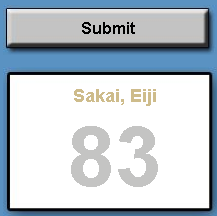
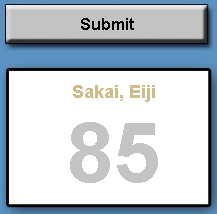
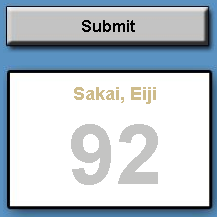
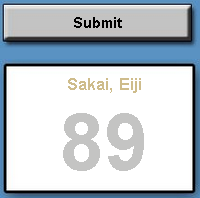
The scores are BEC 83, AUD 85, FAR 92 and REG 89, where 75 is the passing mark.
I am very grateful to those who helped me successfully achieve the goal. I'd like to say the biggest thanks to my mother, who kept encouraging me while I was preparing for the exam.
I studied for the exam during the 7 month period starting December 2009 and ending June 2010. I studied about 1,000 hours during that period. REG was the most difficult part for me.
My main textbook was Wiley. I also used some Japanese textbooks but didn't find them very useful.
Business Environment and Concept(BEC)
Auditing and Attestation(AUD)
Financial Accounting and Reporting(FAR)
Regulation(REG)
Two days ago, I finally learned that I had passed all 4 parts!
The scores are BEC 83, AUD 85, FAR 92 and REG 89, where 75 is the passing mark.
I am very grateful to those who helped me successfully achieve the goal. I'd like to say the biggest thanks to my mother, who kept encouraging me while I was preparing for the exam.
I studied for the exam during the 7 month period starting December 2009 and ending June 2010. I studied about 1,000 hours during that period. REG was the most difficult part for me.
My main textbook was Wiley. I also used some Japanese textbooks but didn't find them very useful.
Business Environment and Concept(BEC)
Auditing and Attestation(AUD)
Financial Accounting and Reporting(FAR)
Regulation(REG)
Friday, August 6, 2010
Tweeting in English
I have just started tweeting in English at @elm200e. Please follow me if you are interested.
Wednesday, May 12, 2010
Why are Japanese white-collar workers inefficient?
"Why are Japanese companies so slow in decision-making?"
"I never know who is responsible for what in Japanese companies."
These are common complaints made by foreigners who conduct business with Japanese companies. Even Japanese people including me often feel frustrated in the same way.
Japanese companies can be very different from those in the West. A Japanese company does have a organizational chart that is very similar to one in a western company. However, the way they actually operate is very different. In a Japanese company, its formal hierarchical organizational chart is less relevant than its informal power structure. In Japan, power is much more spread toward the lower rank than in the West. More than often, a Japanese boss can be a mere symbol that integrates his or her section rather than an active leader who command his or her employees. You can recall the position that the Japanese emperor occupies in the constitution. Probably, this implies something more than only a coincidence.
Even if you are a businessperson in negotiation and have reached an agreement with a person who is supposed to have authority in a Japanese company, therefore, you can never feel relieved. His or her promise will not fulfilled unless his or her boss, coworkers and even subordinates in the company also agree with it. People have to go through a prolonged process of soliciting supports from other "interested parties" in the same company. This process is called "nemawashi" in Japanese, and one of the most important techniques you have to be proficient in to get work done in a Japanese company.
Cumbersome as it might look, the lengthy solicitation process or nemawashi has a positive aspect. Unlike an imperative working environment in the West, Japanese employees are encouraged to participate in decision making processes even if they are low-ranking. Japanese employees can have a high morale and feel that "we are supporting our own company". This mechanism seems to have worked very well until 1990 when Japanese economy enjoyed a rapid development.
However, the serious pitfall of this "all-participatory management" is that it is very obscure who has real authority and responsibility. When a company has to embrace a drastic change, it suddenly becomes paralyzed. Since nobody seems to take a responsibility, it is extremely hard for the company to make a risky but potentially profitable decision. Nobody takes initiative. Every single employee becomes quite conservative and sticks to status quo as much as possible, even if they are subconsciously aware that things won't last forever.
In a nutshell, this is where we Japanese are. These phenomena are quite pervasive and can be observed in every single aspect of Japanese society now. Probably, many people outside of Japan have already realized how ineffective Japanese politics are. This is only one example of the wide spread "indecisiveness syndrome" that inflicts Japanese society.
As a Japanese national, I long for the solution that addresses to this problem. However, I am also aware, with a little resignation, that it will take a long time before Japan gets rejuvenated by overcoming this issue because the problem runs deep in the very Japanese culture itself.
Tuesday, May 11, 2010
Japanese society resisting change
My Japanese blog is getting even more popular these days. However, it doesn't make me so happy. The more I think about Japanese society, the more despair I feel.
Many Japanese companies still force employees to work for long hours and are even reluctant to pay for their overtime. This is obviously an illegal act but the Japanese society is somehow lenient with it.
Today I discovered a surprising fact. According to this paper, working hours of Japanese workers have not changed at all during the period between 1986 and 2006. This report's conclusion apparently contradicts Japanese government's official statistics, which show a significant decrease(more than 15%) in working hours in Japan. This mystery stems from the existence of unpaid overtime work, also known as "complimentary overtime work(sabisu zangyo)". Employers report their employees' working hours based on the amount they have actually paid to them. However, it is an open secret that employees are "not allowed to ask" their employers for overtime payment to the full extent. Therefore, the governmental statistics inevitably show a lower number than the actual one in working hours. How unfair.
Now we know that the working hours are about the same between 20 years ago and now. Here, we need to pay attention to the fact that Japanese economy was enjoying such a prosperity so called "bubble economy" 20 years ago. People were much better off then than now. Yet Japanese people work as long hours now as 20 years ago. It is puzzling.
The conclusion is rather simple: after all, Japanese companies have failed to improve labor productivity miserably. Or maybe they even have not tried to do so in the first place. For many Japanese people, labor is supposed to be cheap or even free just as the name "sabisu zangyo(complimentary overtime work)". They never really made an serious effort to save labor cost by restructuring the workflow. Employers simply chose not to pay overtime time payment.
You might wonder why Japanese employees are still as obedient as sheep after this kind of unfair treatments. The answer can be found by looking at a unique feature of Japanese labor market. It's very difficult for Japanese workers to switch workplace. It is still considered a social stigma. Working long hours is thought to be a sign of diligence. Innovating a new way to save labor time is not really encouraged and it is sometimes labeled as a form of laziness.
Japan's economic stagnation is blamed on Japanese companies' own behavior. Japan has been defeated by itself. But they are yet aware of it.
It's alright. That's THEIR way. They go their way, while I go my way. It's them who are ultimately responsible for their own acts. I will go my own way on my own risk. Nobody can prevent me from doing so.
Subscribe to:
Posts (Atom)